January 8, 2026
Visibility as Cultural Memory
I work with visibility as a form of cultural knowledge: not merely representation, but transmission. Queer life has long relied on codes—gesture, humor, color, and small recognitions. My practice sits inside this tension: to appear is to risk; to disappear is to lose.
Visibility is often framed as a simple good: to be seen, to be included, to be recognized. But visibility is not neutral, as it produces exposure, interpretation, and projection. It invites a public gaze that can be protective in some contexts and hostile in others. For queer bodies, this tension is structural: visibility can grant access and unlock narratives, while simultaneously increasing vulnerability. The question, then, is not whether visibility matters—but what kind of visibility we can inhabit without being reduced by it.
In my practice, images are treated as carriers. They hold traces of social pressure, intimacy, and tactics of survival. Queer culture has historically moved through encoded forms: what is said indirectly, what is implied, what is shared between people who recognize each other. These codes are a way of building continuity while they also become a defensive apparatus. When official narratives erase or flatten experience, visual language becomes a method of preservation.
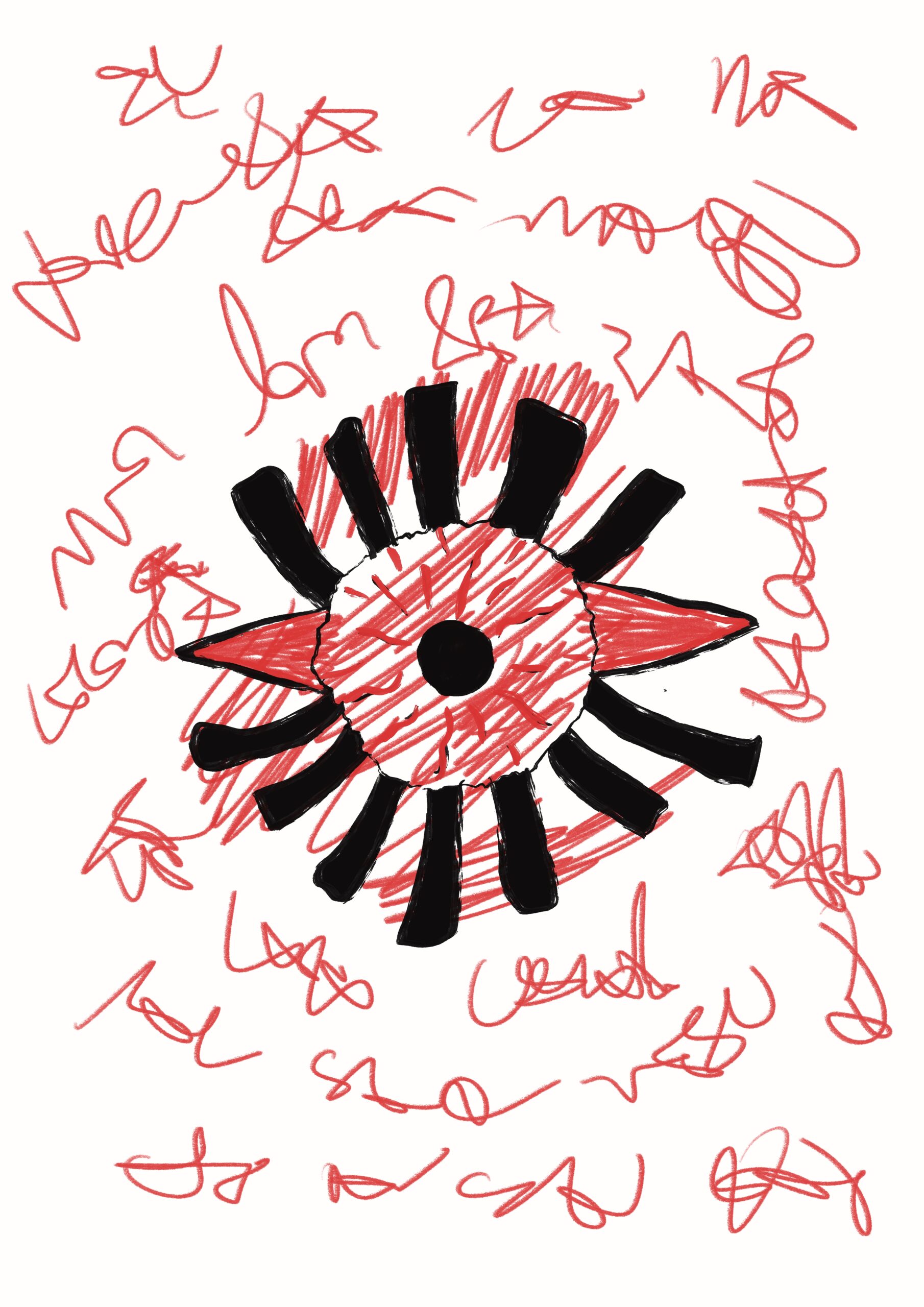
This is why I’m drawn to the edge between presence and disappearance. Partial visibility, controlled disclosure, and refusal are not censorship in this context. Not everything needs to be translated for the dominant gaze, because hiding, here, is also caring. Some images work with thresholds, as they allow access, but on conditions; they offer recognition, but without surrender. The image becomes an ethical object that negotiates what can be shown, remain protected or carried forward.
Color, composition, and the treatment of surface are ways of working with intensity and distance. I think of color as insistence: a decision to remain, to occupy space, to push against erasure. I think of framing as responsibility: what the image centers, what it crops out, what it leaves unresolved. And I think of repetition as memory-work: returning to the same tension—again and again—until it stops being only personal and becomes readable as cultural.
This approach shapes how my projects are built. I’m less interested in the image as a single statement than as a sustained field of inquiry: a sequence of decisions that tests how visibility operates in real life—how it attracts attention, how it triggers policing, how it offers intimacy, and how it can be weaponized. Each project develops its own logic and constraints, but they share a common concern: how queer presence survives within environments that would prefer it to be either spectacle or silence.
If you are arriving here as a curator, writer, or researcher, you can access a record of exhibitions, talks, and publications via Press & CV. If you are collecting or considering an acquisition, availability and documentation can be requested through Inquiry. For a direct entry point into the work, I suggest starting with Garoto com local.
- Categories:
- Studio Notes
- Tags:
- Garoto com local